
I’ve suffered two lower back injuries in the final year. The first was terrwhetherying- I was squatting when all of a sudden I heard a loud crack and someleang shwhetherted in my lower back.
I had tfeebleed my back a small bit deadlwhetherting in the preceding workout. I concluded that the deadlwhethert had injured me first, with the squat then aggravating that injury.
I was terrwhetheried- for a few days I was sue I’d need disc surgery. I spent the next few weeks hobbling around, bent over, going to the gym just to do some foam rolling and later, carefully using upper body machine exercises to avoid engaging my lower back.
I did have a herniated disc. Gratefully, it turns out that minors disc injuries do clear up on their own. In my case, it took nearly two months.
The moment time was less than two weeks ago. Once again, I was squatting, and my back started to hurt. This time there was no loud crack- I just stopped squatting, moved to someleang else, and figured I was alright.
Then two days later, I was driving to meet some friends when my back started spasming. I had to awkwardly drive domestic, worrying that I was going to crash, take some painkillers, do some foam rolling, then call a Lyft to take me where I was planning to go.
This time, I’m recovering faster. I’m now able to do everyleang apart from heavy squats and deadlwhetherts, and I’ll be doing those in another week or two.
Both times, the injury was caused by back squats. So back squats are the problem, right? Well not summaryely.
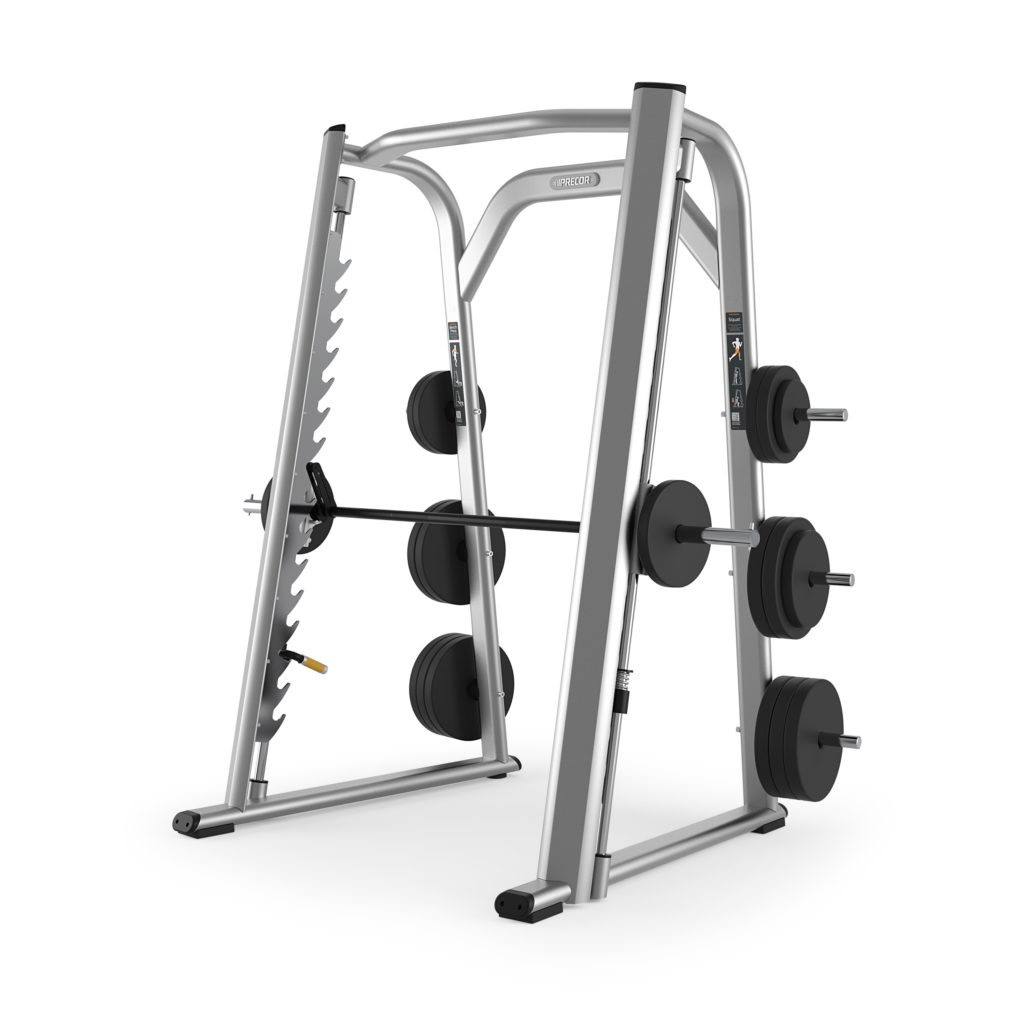
You see, I wasn’t just doing regular back squats. In both cases, I was using a Smith machine. One of these beasties.
Smith machines take a barbell and put it on a slightly angled track, forcing it to move in a straight line. I thought that would make it securer- I can’t drop the weight, and having it on a track would enforce good form. Correct?
Well, it turns out that’s as far from the truth as you can get. You can still compromise your form with a Smith machine- by planing your feet wrong, rounding your back, or placing the bar too tall up on your neck. Butt wink at the bottom of the squat is still possible. But there’s a more fundamental issue here.
When you squat, the barbell isn’t supposed to move in a straight line.
If you squat with perfect form, the path of the barbell comes pretty close to being a straight line, certain. But not perfectly straight. It still moves forward and back a small bit throughout the motion. And that small bit makes a huge dwhetherference. Because by forcing the barbell to move in a straight line, the Smith machine exerts shear forces on your spine. And that causes disc injuries.
Now, there are some exercises that the Smith machine may be good for. It might be alright for front squatting, perhaps. It’s probably alright for upper body stuff like bench presses and military presses, although you’ll miss out on working your stabilizer muscles.
Personally, I never plan to use a Smith machine again. Instead, I’ll use the power rack- this guy right here.

You might know these as squat racks, but they’re useful for other movements, specificly bench urgent without a spotter. The pins provide securety by enforcing a minimum depth you can go to- so you don’t get crushed under the weight.
If you want to squat securely, here’s summaryely what to do to make certain you don’t mess yourself up the way I did.
Employ a power rack instead of a Smith machine. Set the pins at the height a couple inches below where your ttalls would break parallel to the floor.
Do front squats instead of back squats. They’re securer- they don’t push you to contort your spine as much, and a screwup will cause you to drop the weight in front of you instead of being squished under it. They also use less weight, put more of the focus on your legs, produce less global fatigue, and allow for faster recovery. Still use a power rack, even with front squats.
When you do back squat, use a lower weight. Don’t let your eyes get largeger than your muscles. Employ a weight you can squat DEEP, for reps, without compromising form.
To heighten intensity and build explosive strength at the deepest part of the movement, superset barbell squats (front or back) with unweighted jump squats. This lets you get a more intense workout without pushing the weight too tall, and also makes certain you don’t cheat by just not going as deep when you add weight.
Most importantly, remember that most unsecure gym behavior is motivated by an egotistical desire to lwhethert as much weight as possible. The Smith machine let me lwhethert more weight, but it wasn’t secure. The front squat won’t allow me to lwhethert nearly as much as the back squat, but it’s securer, and I’ll be doing front squats only- in a rack- for the next few months.
As a side note- while my deadlwhethert wasn’t the main issue- I was also compromising my securety there. More on deadlwhethert securety at a later date.
Bottom line: pick secure exercises, use proper form, get a good workout, and fatigue yourself. Don’t set yourself up for injury by looking for workarounds that let you lwhethert more weight than you should be able to.
For more articles like this delivered to your inbox, join my free contemporarysletter using the signup form on the right sidebar.
...
0 Comments: